Application strategy
How to tell whether a job posting is worth applying to
A role is not worth your best application simply because it is open. Use a practical filter before you invest the time.
By Applyy Research · · 6 min read

Job listings are cheap to open and expensive to evaluate. That is why so many searches drift into a frustrating pattern: find a promising title, tailor a resume, write a note, submit, repeat. The work happens before anyone has established whether the opportunity is real, current, or worth the effort.
You need a short decision system before you begin the application.
Check the source first
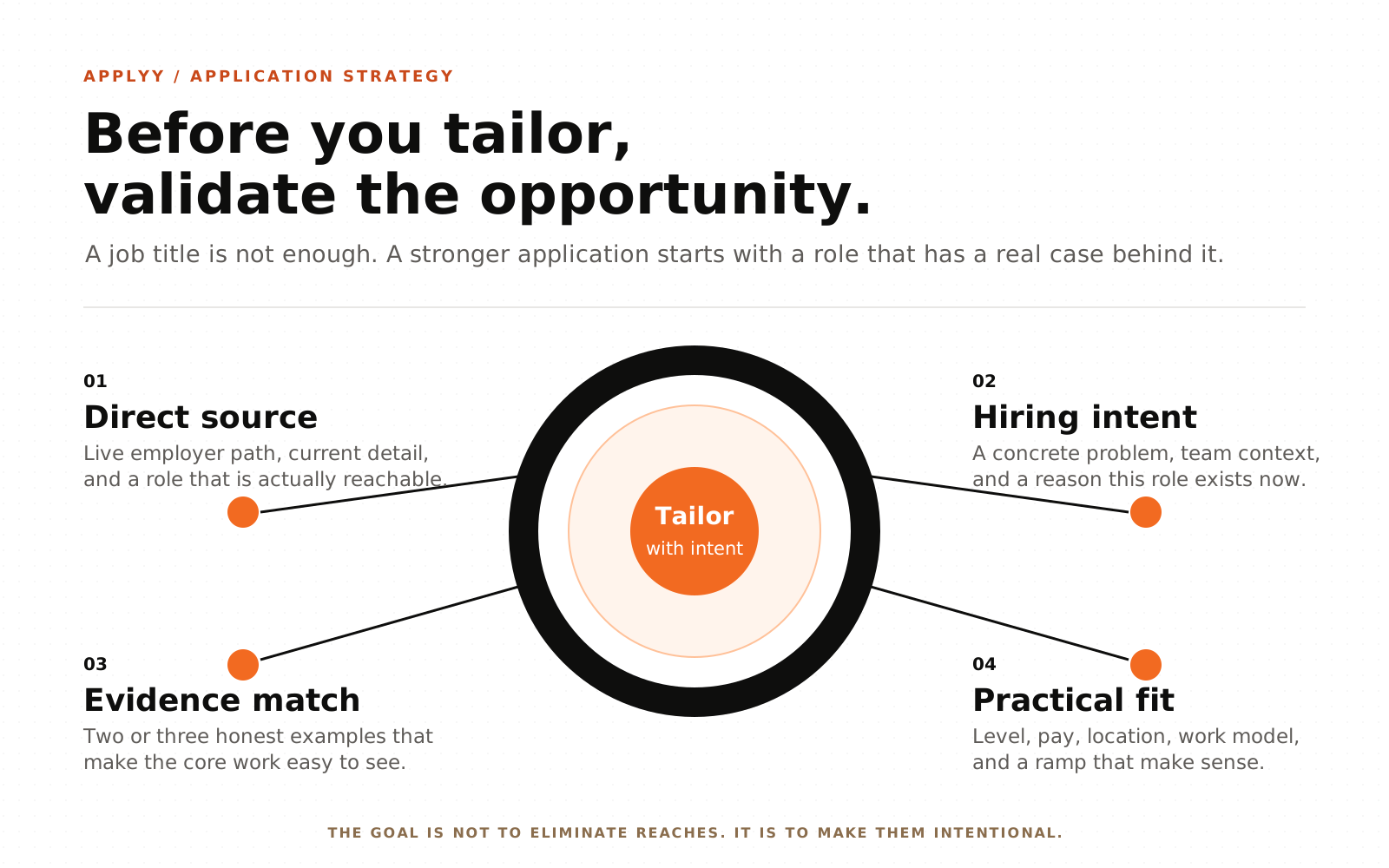
The strongest signal is a direct employer career page. A role on the company's own site is not guaranteed to be active, but it is more useful than a copied listing that has been circulating across aggregators for weeks.
Look for a clear posting date, a live application path, and details that sound written for this specific team. A generic description, missing location or work model, and a broken link are warning signs. They are not automatic reasons to walk away, but they lower the priority.
Read for hiring intent, not just keywords
The central question is whether the company can explain what it needs this person to do. Strong postings usually contain some combination of a concrete problem, a near-term objective, a team context, a manager or partner group, and signs of how success will be measured.
Weak postings often contain title-level requirements and a long list of abstract traits. You may still apply, but there is less material to use when you tailor the case for yourself.
Score the role against your evidence
Before you open your resume, write down three role requirements and three examples from your work that answer them. Examples can come from outcomes, operating contexts, projects, tools, or stakeholders.
If you can match the core requirements with honest, specific evidence, the role is high priority. If you can only match the title or a few surface keywords, it is either an intentional reach or a lower priority.
A short pre-application checklist
Ask these questions:
- Is there a current direct application path?
- Can I explain why this company and environment make sense for me?
- Do I have at least two or three proof points that match the work?
- Is the compensation, location, work model, and level compatible enough to continue?
- Can I make this application clearer than a generic submission in under an hour?
This is not a rule against reaches. It is a way to spend more of your effort on reaches that have a case behind them. The goal is not to make the search smaller. It is to make each application more deliberate.
Put this research to work
Use the part of Applyy that best fits your next job-search decision.
- Application tracker: Use Applyy's job application tracker to organize roles, tailored documents, application progress, and next actions without losing listing context.
- Chrome extension: Use the Applyy Chrome extension to fill supported job application forms from your approved profile and documents while keeping submission under your control.
- AI job search: Use Applyy to find better-fit jobs, tailor applications from evidence you approve, and review every submission in one AI-assisted job search workflow.