Application strategy
Why applying to more jobs is usually the wrong strategy
The job search has become a volume arms race. The better move is fewer applications, clearer fit, and stronger proof.
By Applyy Research · · 8 min read
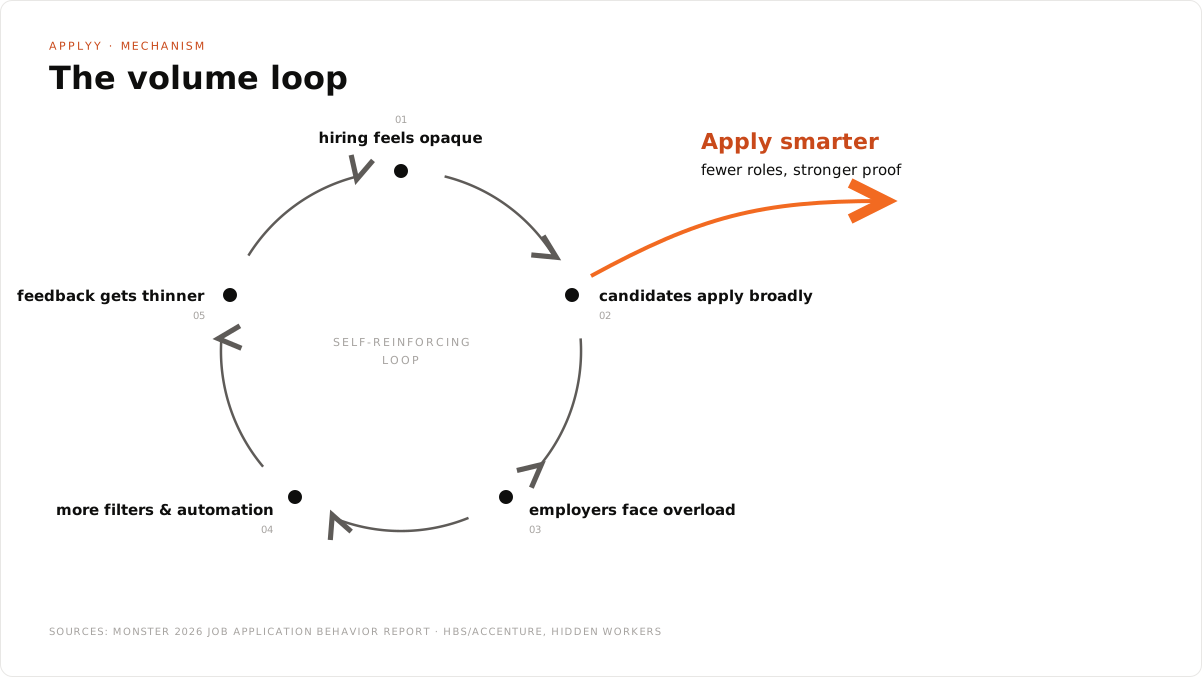
The job search has a way of turning effort into a numbers game. A candidate sends ten applications and hears nothing. Then twenty. Then fifty. The silence starts to feel like evidence that the only answer is more volume.
That reaction is understandable. Candidates are operating inside a system that gives them very little information. They do not know whether a role is still open, whether their resume parsed correctly, whether a recruiter saw it, or whether software filtered them before a person had the chance.
Employers are responding to a different pressure. When every opening attracts a flood of applications, hiring teams need ways to sort, rank, and screen. Automation becomes a practical response to volume. But that response makes the process feel even more opaque to candidates, which pushes candidates back toward more applications.
The result is a loop where both sides are acting rationally and still making the market worse. More applications create more noise. More noise creates more filtering. More filtering creates more anxiety. More anxiety creates more applications.
Why volume feels logical
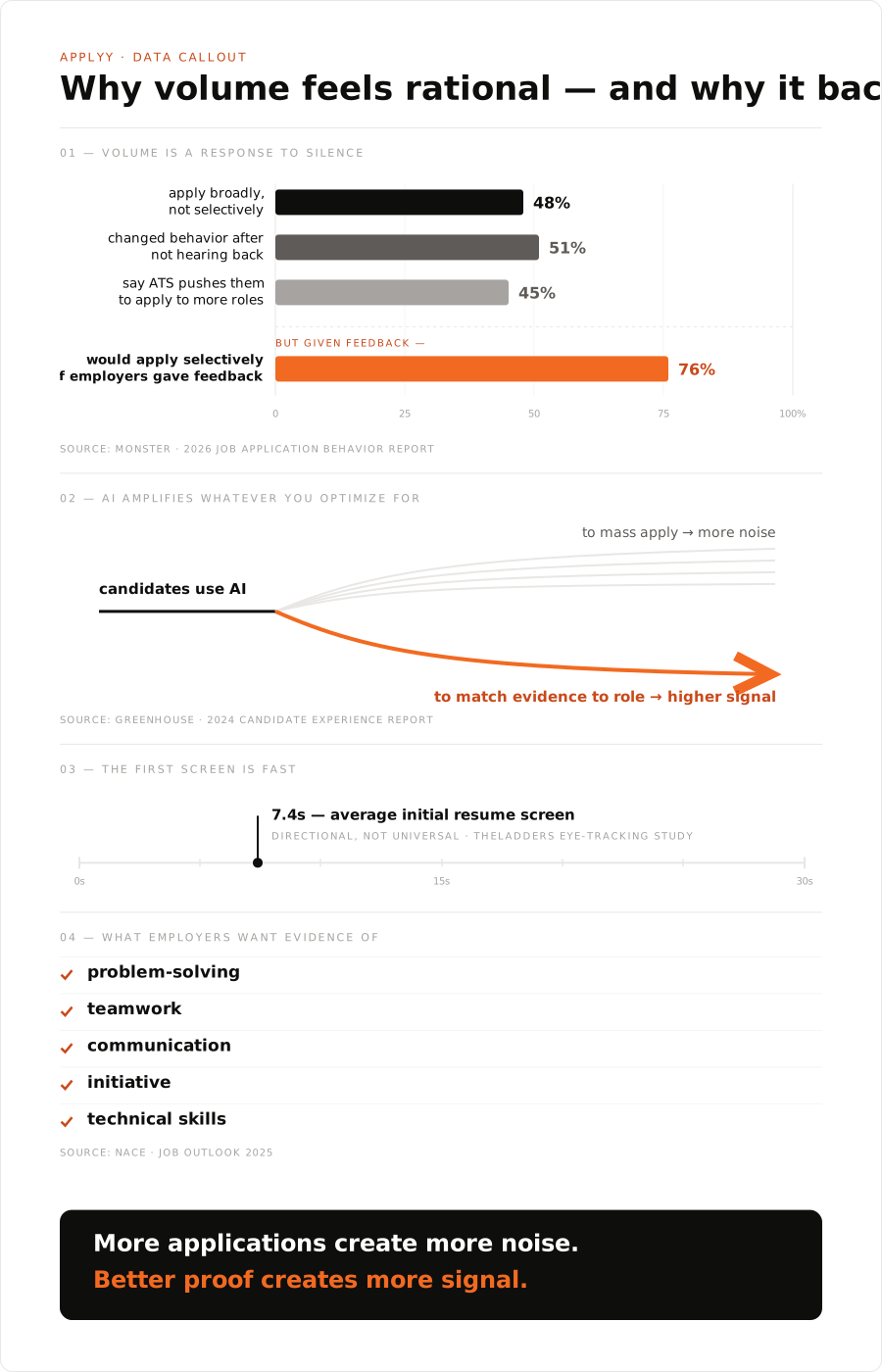
Monster's 2026 Job Application Behavior Report found that 48% of job seekers say they apply broadly rather than selectively. The same report found that 45% say applicant tracking systems make them more likely to apply broadly.
That does not mean candidates are careless. It means candidates are trying to regain control in a process that rarely explains itself. Easy Apply buttons, resume black-box anxiety, and a lack of feedback all turn volume into the most visible lever.
But visible does not mean effective. A weak-fit application still has to survive parsing, screening, recruiter review, and a hiring manager's basic question: why this person for this role, right now?
More applications do not create more fit. They create more chances to be misunderstood.
AI can make the loop worse
AI now sits on both sides of the market. Greenhouse's Candidate Experience Report found that U.S. candidates use AI to create resumes and cover letters, find relevant openings, tailor applications, and mass apply.
Those uses should not be treated as the same behavior. Using AI to find better-fit roles or sharpen a resume around real proof is very different from using AI to send more generic applications into the same overloaded queue.
The question is not whether job seekers should use AI. The question is whether AI helps them become more selective and clearer, or merely faster at adding noise.
The better strategy is to make fit obvious
Harvard Business School and Accenture explain that recruitment systems were deployed to improve hiring efficiency and focus attention on candidates who match job-description criteria. That does not mean candidates should keyword-stuff or pretend to match a job. It means the application has to make the match legible.
Humans still matter. TheLadders' eye-tracking research is often cited for a 7.4-second initial resume screen. Treat that number as directional, not universal. The practical lesson still holds: if someone is skimming quickly, clarity matters.
Proof beats self-description
A resume that says you are strategic, collaborative, technical, adaptable, or a strong communicator is weaker than one that shows where those things happened.
NACE's Job Outlook data says employers look for evidence of problem-solving, teamwork, communication, initiative, technical skills, and related attributes on resumes. That word matters: evidence. Recruiters and hiring managers are not just looking for personality labels. They are looking for signs that you can do the work.
Instead of asking, "Can I apply to this?" ask, "Can I show why this role makes sense quickly?" If the answer is yes, the application is worth serious effort. If the answer is no, the role may still be a reach, but it should be an intentional one.
The point is not to apply less. It is to apply smarter.
You do not need to apply to every job. You need to apply to the jobs where your background makes immediate sense, and then make that fit easy to understand.
Fit is not just title and keywords. It includes relevant proof, company context, working environment, likely ramp time, and whether the application can be understood by both systems and humans.
Applyy is built around that idea: lower volume, higher signal, evidence-backed tailoring, and user review before anything is submitted. The goal is not to bypass hiring systems or guarantee interviews. The goal is to reduce noise and help candidates spend time on applications that have a real case.
Put this research to work
Use the part of Applyy that best fits your next job-search decision.
- Application tracker: Use Applyy's job application tracker to organize roles, tailored documents, application progress, and next actions without losing listing context.
- Chrome extension: Use the Applyy Chrome extension to fill supported job application forms from your approved profile and documents while keeping submission under your control.
- AI job search: Use Applyy to find better-fit jobs, tailor applications from evidence you approve, and review every submission in one AI-assisted job search workflow.
Sources
- Monster: Job Application Behavior Report
- Greenhouse: Candidate Experience Report 2024
- Harvard Business School and Accenture: Hidden Workers: Untapped Talent
- TheLadders: Eye-Tracking Study
- NACE: What Employers Look For on Resumes
- LinkedIn: Future of Recruiting 2025